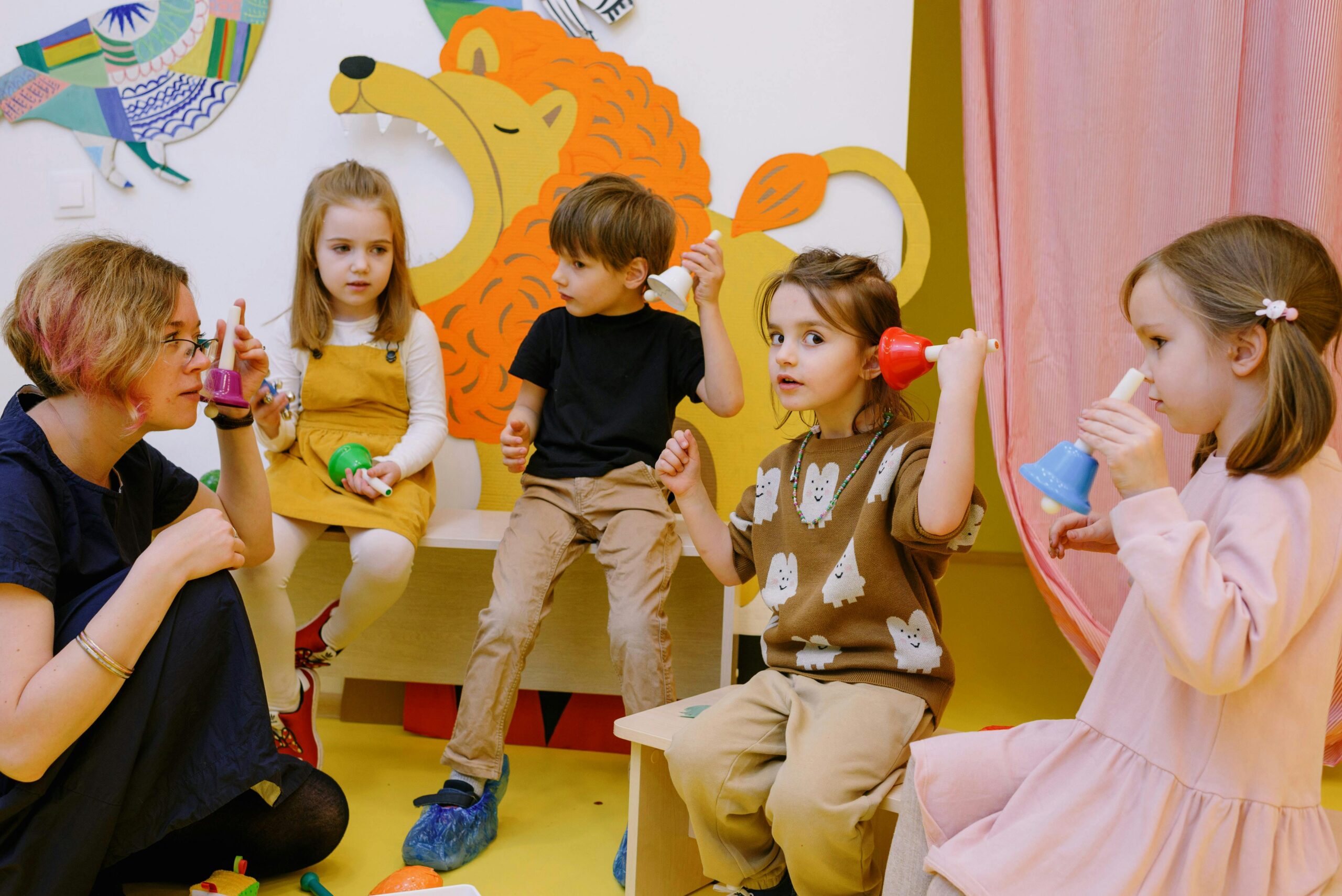
Choosing the right daycare isn’t just about the playground or snacks—it’s also about how your child will learn and grow. Most daycares follow a specific curriculum, which is a learning plan that helps teachers support your child’s development through play, stories, songs, routines, and hands-on activities.
So, how to choose the right daycare best for your child?
Here are the key things to look for during your search:
- Accreditation – Are they meeting high-quality standards?
- Curriculum – What learning approach do they follow?
- Parent Communication – How will you stay informed about your child’s day?
- Progress Tracking – How do they observe and support your child’s development?
- Philosophy – Do their values and teaching style align with your family’s?
Choosing a daycare is a big decision, but when you know what to ask and what to look for, you’ll feel more confident finding a place where your child can thrive.
What Does It Mean When a Daycare Is “Accredited”?
Accreditation means that a daycare or preschool has been reviewed by a trusted organization and meets high-quality standards for aspects such as safety, curriculum, teacher training, family involvement, and child development.
It’s like a gold seal that says:
“We don’t just meet the minimum—our program goes above and beyond.”
Who Accredits Daycares and Preschools?
Here are the main organizations that accredit early childhood programs, plus the curricula they often work with:
NAEYC (National Association for the Education of Young Children)
What it means:
NAEYC is the most well-known accrediting body in the U.S. for early childhood programs. Only programs that meet strict quality standards in teaching, relationships, health, safety, and family partnerships are eligible for this recognition. The U.S. Military uses NAEYC as its accreditation. Read more information about them and what they stand for here: NAEYC
Common Curricula Used:
- The Creative Curriculum®
- HighScope
- Frog Street
- Tools of the Mind
(NAEYC doesn’t require one curriculum—it just needs to be research-based and developmentally appropriate.)
Why it matters to parents:
NAEYC-accredited schools have better teacher-child ratios, trained staff, strong learning goals, and a commitment to family engagement.
NECPA (National Early Childhood Program Accreditation)
What it means:
Another U.S. accreditation that focuses on small- to mid-sized centers. It checks the curriculum, environment, staff qualifications, and program structure.
Common Curriculums Used:
- The Creative Curriculum®
- Scholastic
- Big Day for Pre-K
- Mother Goose Time
Why it matters to parents:
It ensures your child is in a safe, nurturing, and educational environment, especially in private centers or faith-based programs.
NAC (National Accreditation Commission)
What it means:
Accredits smaller child care centers and preschools. Like NECPA, it emphasizes quality care, staff training, family involvement, and developmentally appropriate learning.
Common Curriculums Used:
- Creative Curriculum®
- HighScope
- Frog Street
- OWL (Opening the World of Learning)
Why it matters to parents:
It’s a strong signal that the program prioritizes both early learning and relationship-building with families.
Head Start Program Performance Standards (HSPPS)
What it means:
Head Start and Early Head Start are federal programs, not accredited by a third party, but heavily monitored and required to meet high federal standards.
Common Curriculums Used:
- Creative Curriculum®
- HighScope
- Frog Street
- OWL
- Tools of the Mind
Why it matters to parents:
You’ll get not just education, but also health screenings, meals, disability services, and family support.
Montessori Accreditation Bodies
| Accreditor | Details |
| AMI (Association Montessori Internationale) | Global accreditor founded by Maria Montessori’s family. Very strict about “pure” Montessori programs. |
| AMS (American Montessori Society) | U.S.-based accreditor. Allows more flexibility in program structure. |
| MACTE (Montessori Accreditation Council for Teacher Education) | Accredits teacher training programs, not schools themselves. |
Why it matters to parents:
True Montessori schools must meet the standards of these organizations. Many places claim to be Montessori but are not certified.
Waldorf and Reggio Emilia (Less Formal Accreditation)
Reggio Emilia:
There’s no formal accrediting body. Instead, schools are said to be “Reggio-inspired.”
Look for programs that:
- Encourage child-led projects
- Use documentation (photos, quotes, portfolios)
- Have open-ended materials and art supplies
Waldorf:
- Waldorf Early Childhood Association of North America (WECAN) accredits Waldorf schools in North America.
- Accredited schools must adhere to Steiner’s educational philosophy, and their staff must receive training accordingly.
What Is a Curriculum and Why Does It Matter?
A curriculum is the roadmap for your child’s learning. It guides what teachers teach, how they teach it, and how they support your child’s social, emotional, physical, and cognitive growth. Whether your child is in a home daycare or a large center, chances are their teachers are following a specific curriculum or philosophy.
The 3 Types of Curriculums in Early Education
1. Packaged Curriculums
Designed by educational companies and often used in larger centers or public programs.
Comes with lesson plans, assessments, and training
Examples:
- The Creative Curriculum®
- Frog Street
- Big Day for Pre-K
- OWL (Opening the World of Learning)
- Scholastic Early Learning
2. Philosophy-Based Curriculums
These are guiding beliefs about how children learn best, rather than scripted programs.
Teachers build activities around the philosophy
Examples:
- Montessori
- Reggio Emilia
- Waldorf / Steiner
- Anji Play
3. Research-Based/Academic Frameworks
Backed by child development science and used in public programs like Head Start
Focus on long-term learning outcomes
Examples:
- HighScope
- Tools of the Mind
- Core Knowledge Preschool Sequence
- Connect4Learning (C4L)
How Do Daycares Track a Child’s Growth and Progress?
One of the most important things a high-quality daycare or preschool can do is keep track of how your child is learning and growing. But how do teachers know what your child is learning? And how do they share that with you?
Here’s how it works—broken down simply:
What Are Observations?
Observations are notes, photos, videos, or checklists that teachers use to document what your child does during the day.
Example:
A teacher might write:
“Jackson used a spoon independently during snack today.”
That small moment shows growth in fine motor skills and independence.
Teachers observe your child in everyday activities—such as playing, talking, eating, building, and solving problems—and use that information to support their development.
While I will explain the types of observations and their uses in a later post, for now, please know that they are a tool for teachers to track student progress.
What Do Teachers Look For?
Teachers watch for milestones in different areas of development:
| Area is also called the Domain | What Teachers Look For |
| Sorting, matching, memory, and problem-solving | Vocabulary, asking questions, listening, and using words clearly |
| Language & Communication | Taking turns, showing empathy, and regulating emotions |
| Social-Emotional | Interest in books, storytelling, and recognizing letters |
| Physical (Fine & Gross Motor) | Running, jumping, cutting with scissors, holding crayons |
| Literacy | Interest in books, storytelling, recognizing letters |
| Math Readiness | Counting, patterns, understanding “more” or “less” |
What Tools Do Daycares Use?
Most daycares use assessment tools or platforms to keep track of observations and developmental progress:
| Tool | What It Does |
| Teaching Strategies GOLD® | Used with Creative Curriculum; tracks progress from birth to age 5 |
| COR Advantage | Paired with HighScope; records learning in key areas of development |
| Learning Genie / HiMama / Brightwheel | Digital apps that let teachers upload photos, daily reports, and share updates with parents |
| Anecdotal Notes | Handwritten or typed observations used in play-based or philosophy-based programs (like Reggio or Montessori) |
| Checklists or Portfolios | Teachers keep samples of your child’s work, drawings, or writing to show growth over time |
How Parents Are Kept in the Loop
High-quality programs involve parents every step of the way. Here’s how you might hear about your child’s progress:
- Daily reports (apps or paper sheets)
- Photo or video updates
- Parent-teacher conferences (usually twice a year)
- Learning portfolios with samples of artwork, writing, and teacher notes
- Developmental checklists aligned with milestones
- Progress reports with insights into strengths and areas to support
Understanding a Daycare’s Teaching Philosophy
Just like people, every daycare has a different philosophy—or way of thinking- about how children learn best. A program’s philosophy shapes everything from the classroom layout to how teachers interact with kids.
When you’re choosing a daycare, it’s important to ask:
“Does this program’s philosophy match what I believe about childhood, play, and learning?”
Common Teaching Philosophies in Daycare Settings
| Philosophy | What It Means | Great For Families Who… |
|---|---|---|
| Montessori | Children learn best through independence and hands-on materials. | Want calm, structured, self-directed learning environments. |
| Reggio Emilia | Children are naturally curious and learn through exploration and projects. | Value creativity, collaboration, and child-led inquiry. |
| Waldorf / Steiner | Imagination, rhythm, and nature are central to learning. | Prefer screen-free, artistic, holistic education. |
| Play-Based | Play is the foundation of learning—skills develop through interaction and exploration. | Believe kids learn best when they play freely. |
| Academic / Structured | Focuses on school readiness with direct instruction in reading, writing, and math. | Want early exposure to traditional academics. |
| Emergent Curriculum | Lessons are created around the children’s current interests. | Appreciate flexible learning based on curiosity. |
Teaching Philosophy in Home Daycares
Not all learning happens in a large classroom, and home daycares can offer just as much intentional, quality learning as centers do. The key is understanding the philosophy behind how a home provider teaches and interacts with children.
What to Know:
Home daycares often blend structured learning with the warmth of a home environment. Some providers follow a formal curriculum (like Mother Goose Time, Scholastic, or Creative Curriculum), while others create their own play-based or routine-based plans.
Because the setting is smaller and more personal, many home daycare providers have the flexibility to:
- Follow each child’s interests more closely
- Adapt their daily rhythm to suit the group
- Combine caregiving with meaningful learning moments
Takeaway for Parents:
A daycare’s philosophy tells you how your child will be cared for and taught, not just what they’ll learn. Ensure it aligns with your child’s personality and your family’s values. When it comes to choosing the right daycare, the little things matter, but so do the big-picture questions. Here’s what to keep in mind as you search:
The best programs are intentional.
They don’t just babysit—they teach, observe, and guide your child’s development in meaningful ways.
Curriculum matters.
Whether it’s Creative Curriculum®, Montessori, or a Reggio-inspired approach, a strong curriculum helps your child grow socially, emotionally, and academically.
Accreditation = higher quality.
Accredited centers meet strict national standards and often have better-trained staff, safer environments, and stronger learning goals.
Communication builds trust.
Whether through apps, notes, or meetings, you should be informed about what’s happening in your child’s day and feel like a partner in their learning.
Growth tracking should be ongoing.
Good teachers watch, document, and support your child’s development. You should be able to see your child’s progress and be part of the conversation.
Philosophy should align with your values.
Some programs are structured and academic, while others are free-flowing and creative. Pick the one that fits your child’s learning style and your parenting beliefs.
Home daycares can be just as educational.
Many offer loving environments, age-appropriate routines, and structured learning tools, such as Mother Goose Time or Scholastic kits.
Final Thoughts: Trust Your Instincts—and Ask the Right Questions
Choosing a daycare is one of the most important decisions you’ll make in your child’s early years. While things like location, hours, and cost matter, don’t overlook what really sets a program apart: its curriculum, teaching philosophy, communication style, and commitment to your child’s growth.
Whether you’re touring a large center or an in-home daycare, asking thoughtful questions and knowing what to look for can help you find a place where your child will thrive, not just be watched.
Remember:
- You deserve transparency.
- Your child deserves intentional, loving care.
- And the right daycare should feel like an extension of your home, not just a drop-off point.
Trust your gut, do your research, and don’t be afraid to speak up. You’re your child’s best advocate.
Want More Help Choosing the Right Daycare?
Check out my Resources Page for more insights into child development, early learning philosophies, and parenting support.
Bonus: Download my free printable Parent Questionnaire—a checklist of thoughtful questions to ask any daycare during your search.
It’s designed to help you feel confident, informed, and empowered!
👉 https://parenttogether.blog/parent-teacher-tools/
Featured Image:
Photo by Ksenia Chernaya: https://www.pexels.com/photo/children-with-her-students-holding-different-color-bells-8535230/
