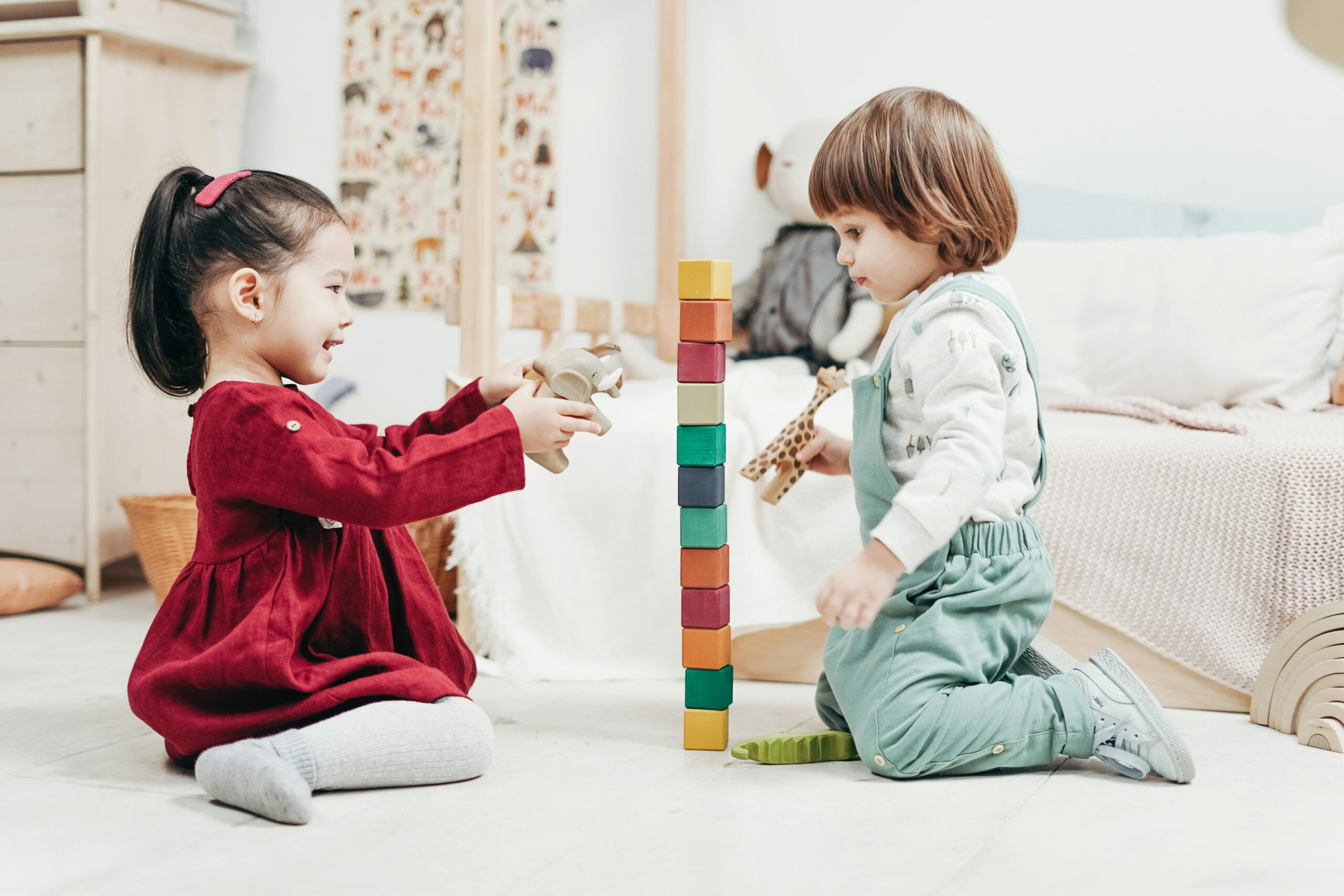
Every child embarks on a unique journey of growth and development. As parents and new caregivers, we often find ourselves wondering, “Is this normal?” “What should I be watching for?” or “How can I help my child thrive?” To address these concerns, we can turn to the science of child development. This field provides us with valuable tools to support our children in meaningful and age-appropriate ways.
What Is Child Development?
Child development encompasses the physical, cognitive, emotional, language, and social changes that occur from infancy through adolescence. These changes generally follow a progression of developmental stages or milestones, which provide insight into how children learn and grow.
Development is not a race; it is a dynamic, individualized process shaped by genetics, environment, culture, and the relationships that surround us. Recent studies have highlighted the impact of stressors, such as the COVID-19 pandemic, on areas like language and literacy, prompting a greater focus on children’s needs in both home and school settings (Courteau et al., 2024).
And so, while we may think development happens only through structured learning or formal education, the reality is that every experience, interaction, and environment influences the outcome of each child’s growth across all domain areas. Whether it’s nutrition, family stress, play, or social interaction, each aspect of a child’s life contributes to their physical, emotional, cognitive, and social development.
What Is DAP and Why Does It Matter?
As we explore how children develop across various areas of growth, a crucial question arises: How can we support this development in a way that truly aligns with each child’s needs? This is where Developmentally Appropriate Practice (DAP) becomes essential. I have likely mentioned this in a previous article, as it is impossible to discuss child development without addressing DAP.
What Is DAP?
Developmentally Appropriate Practice (DAP) is a guiding framework used by early childhood professionals to ensure that the care, learning opportunities, and expectations we provide align with a child’s developmental level, individual needs, and cultural background. It’s not about demanding that children accelerate their learning; instead, it focuses on meeting them where they are and gently guiding them forward.
According to the National Association for the Education of Young Children (NAEYC), DAP is based on three core considerations:
- What is age-appropriate? What research tells us is typical for children at a certain age or stage.
- What is individually appropriate? What we learn by observing and interacting with a specific child is their strengths, needs, and interests.
- What is culturally and socially appropriate? What we learn about the child’s background, family, traditions, and values enables us to offer respectful, meaningful support (NAEYC, 2020).
Why DAP Matters for Parents
It’s easy to fall into the trap of comparing children—especially with the abundance of milestone charts, social media posts, and well-meaning advice from others. However, Developmentally Appropriate Practice (DAP) reminds us that:
- Children develop at different rates.
- Learning is not a linear process; a child may excel in one area while plateauing in another.
- A child’s upbringing, language, culture, and emotional environment all impact how and when they grow.
Reid, Scott-Little, and Kagan (2019) emphasize the importance of applying standards with cultural flexibility—what works in one classroom or family may not be effective in another. This is why DAP promotes a personalized, holistic approach rather than a one-size-fits-all checklist.
A Gentle Reminder:
Sometimes frustration—whether from a child or a parent—comes from expecting too much, too soon. Asking a child to master a skill that is beyond their current stage can lead to stress, power struggles, and even a drop in self-confidence. DAP helps us avoid this by ensuring expectations match the child’s readiness. When we meet children where they are, we create space for growth, joy, and a stronger parent–child connection.
Example 1 (Preschool): Imagine a 3-year-old being told to sit perfectly still for 20 minutes while listening to a story without moving or talking. At this age, most children simply lack the attention span and self-regulation to meet that expectation. Instead of seeing it as “misbehavior,” DAP invites us to adjust—perhaps by reading shorter stories, using engaging voices and pictures, or allowing them to hold a soft toy while listening. By meeting them where they are, we build positive experiences that prepare them for longer attention spans later.
Example 2 (Early Elementary): Picture a 6-year-old being asked to write a whole paragraph with correct punctuation on their first try. Without strong fine motor skills, vocabulary, and sentence structure practice, that task can feel overwhelming. A DAP approach would be to break it down—start with drawing a picture, then write one or two sentences together, and celebrate their effort. Over time, these small, supported steps lead to confident, independent writing.
How Can Parents Apply DAP at Home?
You don’t need a degree in early childhood education to apply Developmentally Appropriate Practice (DAP) at home. In fact, you might already be doing it when you:
- Follow your child’s interests to guide play and learning. For example, if they love trucks, you could count the wheels, read truck-themed books, or draw vehicles together.
- Adapt activities to match their current level, rather than forcing what is “supposed” to come next.
- Create a safe and loving environment where children feel free to explore and make mistakes.
- Respect your child’s identity and background, including their home language and family values.
- Offer just-right challenges—activities that are neither too easy nor too difficult, always accompanied by encouragement.
Even simple, everyday moments—like cooking together, doing puzzles, or getting dressed—can become powerful learning experiences when guided by DAP principles.
Moving Forward
As we continue to explore each developmental domain, we’ll demonstrate how DAP principles guide not only early educators but also parents like you. Supporting your child’s development doesn’t require perfection—it simply requires being present, responsive, and respectful of who your child is right now.
Next, we’ll dive into what each domain looks like at home, providing practical tips you can use starting today.
From Theory to Everyday Life: Let’s Explore the Domains
Now that we’ve explored what Developmentally Appropriate Practice (DAP) looks like in action, it’s time to take a closer look at the building blocks of child development—the domains. These categories help parents and educators observe, support, and celebrate growth in a well-rounded manner.
Each domain represents a different area of your child’s development, but they do not exist in isolation —they intersect and influence one another. For instance, when your child learns to share (a social-emotional skill), they are also utilizing language, self-control, and problem-solving skills (cognitive skills). Understanding these intersections helps you realize that a single activity can simultaneously nurture multiple areas. Recognizing how the domains overlap enables you to identify hidden learning opportunities and respond in ways that genuinely support your child’s journey. In the next section, we will break down each domain, including what it is, what to look for, and how you can nurture it through simple, everyday experiences at home.
Social–Emotional Development: Building Connection and Confidence
At the heart of your child’s development is their ability to understand and express emotions, form relationships, and navigate the social world. This is known as social–emotional development—and it’s just as important as learning to count or read.
What Does Social–Emotional Development Look Like?
Children grow socially and emotionally when they:
- Recognize and name their feelings
- Learn to manage frustration, sadness, or excitement
- Form healthy attachments with caregivers and peers
- Show empathy for others
- Take turns, share, and solve minor conflicts
These skills don’t appear overnight—they’re nurtured through consistent relationships, safe environments, and patient guidance.
Real-Life Parenting Applications
You can support your child’s social–emotional development at home by:
Modeling emotion regulation
Talk through your feelings: “I’m feeling a little frustrated, so I’m going to take a deep breath.” This helps your child learn to identify and manage emotions.
Creating a predictable routine
Routines help children feel safe and confident. Knowing what to expect reduces anxiety and increases cooperation.
Naming their feelings
Help them make sense of big emotions: “You look upset. Are you feeling sad because your toy broke?” Expressing words for feelings fosters emotional literacy.
Practicing problem-solving
Support their independence by asking guiding questions: “What can we do if we both want the same toy?” Encourage them to come up with solutions.
Watching for cues
Observe how your child handles frustration or new social situations. This gives you insight into where they need support—or where they’re thriving.
Why It Matters
Research indicates that children with strong social–emotional skills are more likely to excel academically, foster lasting relationships, and recover from challenges (Hoferichter & Raufelder, 2025). These skills create a foundation for learning in every other domain.
Physical Development: Growing Strong, Moving Freely
Children explore the world through movement. Whether they’re running across the yard, stacking blocks, or using a spoon, they’re building essential physical skills that support independence, focus, and confidence.
What Is Physical Development?
Physical development is divided into two areas:
- Gross Motor Skills: Big body movements like crawling, walking, jumping, climbing, running, and throwing.
- Fine Motor Skills: Small, controlled movements using the hands and fingers—like grasping a crayon, using scissors, or buttoning a shirt.
Both types of movement are key to your child’s overall development, and they build the strength, coordination, and control needed for tasks in every other domain—including writing, self-care, and classroom participation.
Real-Life Parenting Applications
You can support your child’s physical development at home with simple, playful activities:
Encourage active play
Trips to the park, obstacle courses in the living room, or dance parties in the kitchen all help develop coordination and stamina.
Offer fine motor tools
Provide child-safe scissors, chunky crayons, playdough, stickers, or tweezers to strengthen finger muscles and grip control.
Include them in everyday tasks
Let your child help stir pancake batter, zip their coat, or sort laundry. These daily actions build strength and independence.
Take learning outside
Natural environments, such as backyards, hiking trails, and playgrounds, invite whole-body movement and sensory exploration.
Combine movement with learning
Count while hopping, spell their name as they jump rope, or make letters out of sticks. Movement boosts focus and memory (Jerebine et al., 2024).
Why It Matters
Physical development lays the groundwork for self-care, academic readiness, and emotional well-being. When children can move with confidence and control, they’re more willing to explore, try new things, and persist through challenges.
Cognitive Development: Thinking, Exploring, and Solving
Every time your child asks, “Why?”, takes apart a toy to see how it works, or figures out how to stack blocks without them falling, they’re developing cognitive skills. Cognitive development refers to the process by which children learn to think, reason, remember, and solve problems.
What Is Cognitive Development?
Cognitive development includes:
- Attention and memory: Staying focused and recalling information
- Curiosity and exploration: Investigating new ideas or experiences
- Problem-solving: Finding solutions through trial and error
- Symbolic thinking: Understanding that one thing can represent another (like pretend play)
- Cause and effect: Learning that actions lead to outcomes
These skills build the foundation for academic learning, decision-making, and creativity throughout life.
Real-Life Parenting Applications
You can nurture cognitive development at home with thoughtful play and everyday engagement:
Offer open-ended toys
Blocks, magnets, puzzles, or loose parts invite children to explore and invent their own solutions.
Ask thinking questions
Instead of giving answers, try asking, “What do you think will happen if we try this?” or “How could we fix that?”
Let them experiment
Whether mixing colors in the bathtub or building a tall tower, cognitive development thrives on trial and error.
Encourage pretend play
Dressing up, playing house, or pretending to be animals helps develop symbolic thinking and flexible thinking.
Read and retell stories
Pause during books to ask what might happen next or why a character feels a certain way. Later, ask your child to “read” the story back to you from memory or pictures.
Why It Matters
Cognitive growth supports learning across all domains. It helps children become curious, confident learners who can analyze situations, solve problems, and adapt to new challenges. And significantly, it’s not limited to the classroom—it begins at home, in moments of play, discovery, and conversation (Hoferichter & Raufelder, 2025).
Language and Literacy: Finding Their Voice
Language is more than just talking—it’s how children express themselves, connect with others, and make sense of the world. From a baby’s first coo to a preschooler’s storytelling, language and literacy development form the bridge between thought and communication. I went ahead and combined these two domains into one category.
What Is Language and Literacy Development?
This domain includes two major areas:
- Language: Understanding and using spoken words, following directions, asking questions, and engaging in conversation.
- Literacy: Developing early reading and writing skills—such as recognizing letters, understanding that print carries meaning, and experimenting with drawing or writing.
Early language skills form the foundation for reading and writing. Children need to hear language, practice using it, and see it in action through books, signs, and everyday communication.
Real-Life Parenting Applications
You don’t need flashcards or early reading programs to support this domain—just consistent, rich language experiences:
Read together daily
Choose books your child loves and read with expression. Ask open-ended questions like, “What do you think will happen next?” or “How does that make the character feel?”
Talk with your child, not just to them
Pause and wait for your child’s responses. Even babies respond to back-and-forth “serve and return” communication.
Use songs and rhymes
Singing builds vocabulary, rhythm, and memory. Try nursery rhymes, fingerplays, or simple tunes during transitions.
Create opportunities for writing
Provide crayons, markers, and paper. Let them scribble, draw, or “write” letters, even if it looks like random lines—it’s part of the process.
Label your world
Name items, actions, and emotions throughout the day. Use rich vocabulary, even with toddlers: “That’s a gigantic watermelon!”
Why It Matters
Strong language and literacy skills open the door to learning, self-expression, and relationship-building. Early language gaps can lead to difficulties later in reading and academic achievement, which is why ongoing, language-rich experiences are crucial—especially in the early years (Courteau et al., 2024).
Beyond the Basics: Expanding into the Whole Child
So far, we’ve explored the core four domains—social–emotional, physical, cognitive, and language/literacy—each of which forms a strong foundation for your child’s overall development. These are the areas most people think of when they picture growth in the early years.
But learning doesn’t stop there.
Children are whole beings, and their growth continues in equally important ways through mathematical thinking, scientific discovery, creativity, cultural awareness, and physical expression. These additional domains—often woven into daily life and play—deepen learning and help children connect what they know to the world around them.
In the sections ahead, we’ll explore how these remaining domains—Mathematics, Science & Technology, Social Studies, The Arts, and English Language Acquisition—come to life in your home and how you can support them through joyful, hands-on experiences.
Mathematics Development: Building Early Number Sense
Math is everywhere—and children are natural mathematicians. From sorting toys by color to noticing patterns in their cereal, kids begin developing math skills long before they ever see a worksheet.
What Is Mathematics Development?
In early childhood, math development isn’t just about numbers—it’s about making sense of the world through:
- Number concepts: Counting, recognizing numbers, and understanding quantity
- Operations: Beginning to add or subtract using real-world objects (e.g., “I had 3 grapes and ate 1…”)
- Shapes and spatial reasoning: Identifying shapes, sizes, positions, and directions
- Measurement: Comparing length, weight, or volume
- Patterns and classification: Recognizing, copying, and creating patterns; grouping similar items
These foundational math skills set the stage for logical thinking, problem-solving, and future academic success.
Real-Life Parenting Applications
Math doesn’t have to be taught—it can be experienced, explored, and talked about during everyday routines:
Count out loud
Count snacks, blocks, or steps up the stairs: “One, two, three—three goldfish crackers!”
Sort and categorize
Have your child sort laundry by color, toys by size, or utensils by type.
Build with shapes
Use blocks or cut paper to create patterns and explore spatial awareness: “Can you make a square out of two triangles?”
Play store
Pretend play with money and items builds counting and matching skills. You can also discuss prices, sizes, or other details while shopping.
Use time and measurement words
Say things like: “Let’s set a timer for five minutes”, “Which cup holds more water?”, or “Your shoes are bigger than mine!”
Why It Matters
Early math experiences help children build confidence in problem-solving and reasoning. Studies show that strong early math skills are among the best predictors of later academic achievement, even more so than early reading (Barg et al., 2023). And the best part? Kids develop these skills through play, conversation, and hands-on exploration.
Science & Technology: Exploring How the World Works
Young children are natural scientists. They ask questions, make observations, and test ideas—often without even realizing it. The Science and Technology domain supports this natural curiosity by encouraging children to investigate, predict, and discover how things work.
What Is Science and Technology Development?
In early childhood, this domain includes:
- Inquiry and exploration: Asking questions like “Why?” and “What if?”
- Observation and experimentation: Noticing changes, using the senses, and testing ideas
- Cause and effect: Understanding that actions lead to results (e.g., “If I push this, it rolls.”)
- Classification and comparison: Sorting, matching, and identifying patterns
- Using simple tools and technology: Manipulating objects to achieve a goal or learn new information
This domain encourages problem-solving, curiosity, and logical thinking—all essential for lifelong learning.
Real-Life Parenting Applications
You don’t need lab equipment to support your child’s scientific thinking. The best tools are right in your kitchen, backyard, or bathtub:
Get outside
Nature is a science lab! Watch bugs, collect rocks, compare leaves, or explore shadows and weather.
Experiment in the kitchen
Mix baking soda and vinegar, and observe how the dough rises. Alternatively, melt ice in warm water. Ask: “What do you think will happen next?”
Read nonfiction books
Choose age-appropriate science books about animals, space, plants, or the human body. Follow up with simple experiments or role-play.
Use the senses
Touch, smell, look, and listen. Invite your child to describe what they notice: “How does it feel? What do you see happening?”
🖱 Introduce simple tech
Allow your child to explore age-appropriate tools, such as magnifying glasses, measuring cups, or digital thermometers. Even basic apps or video calls introduce digital literacy when used purposefully.
Why It Matters
Science and technology development teach children how to think, not just what to know. It nurtures critical thinking, persistence, and a sense of wonder—skills that are just as valuable in daily life as they are in school. These early experiences also build confidence in STEM-related areas (science, technology, engineering, math), laying a strong foundation for future learning.
Social Studies: Understanding People, Places, and Community
Children are naturally curious about the world around them—who people are, where they live, what jobs they do, and how things change over time. The Social Studies domain helps young learners begin to understand themselves in the context of their family, community, and culture.
What Is Social Studies Development?
In early childhood, social studies is less about memorizing historical facts and more about building awareness and understanding of:
- Self and others: Recognizing identity, similarities, and differences
- Family and community: Understanding roles, traditions, and responsibilities
- Geography: Exploring environments, maps, directions, and landmarks
- History and change: Learning how people and places change over time
- Civic responsibility: Practicing fairness, cooperation, and group participation
These concepts help children develop a sense of belonging, respect for diversity, and the early seeds of citizenship.
Real-Life Parenting Applications
You can support your child’s social studies development through stories, conversations, and family traditions:
Talk about your family and heritage
Share stories about your childhood, relatives, holidays, and traditions. Discuss similarities and differences with others in your community.
Explore maps and places
Look at a map together or discuss where your grandparents live. Use a globe or simple neighborhood walk to explore location and direction.
Include them in community life
Take your child to the grocery store, post office, or farmer’s market. Talk about the people who help our community run.
Read books about different cultures
Choose stories that highlight diverse families, jobs, and communities. Ask questions like, “What’s different in this story? What’s the same?”
Practice fairness and cooperation
Use everyday opportunities—such as taking turns or voting on what to eat for a snack—to model fairness, empathy, and effective group decision-making.
Why It Matters
Social studies helps children develop identity, empathy, and connection to the world around them. By exploring family, culture, community roles, and changes over time, they learn how they fit into society and how to respect those who are different from them (Reid et al., 2019).
The Arts: Expressing Creativity, Emotion, and Imagination
Give a child a crayon, a drum, or a costume—and watch their imagination come to life. The Arts domain supports children’s ability to express themselves through visual art, music, movement, and dramatic play. It’s not about perfect technique—it’s about creativity, emotion, and exploration.
What Is Arts Development?
The arts in early childhood include:
- Visual arts: Drawing, painting, coloring, cutting, gluing, building
- Music: Singing, rhythm, making sounds with instruments or everyday objects
- Dance and movement: Moving freely to music, copying dance steps, or using movement to tell a story
- Dramatic play: Pretending, role-playing, acting out characters or stories
These forms of expression are essential for brain development, emotional regulation, and communication—especially for children who may not yet have the words to express big feelings or ideas.
Real-Life Parenting Applications
You don’t need expensive materials to support your child’s artistic development. Just offer time, space, and freedom to explore:
Make art supplies available
Create an “art corner” with crayons, stickers, paper, glue, and recyclables. Let your child create freely—no instructions needed.
Sing throughout the day
Sing transition songs (“Clean up, clean up…”), nursery rhymes, or even made-up songs about daily tasks. Children love repetition and rhythm.
Encourage movement and dance
Play different types of music and let your child move however they like. Imitate animal walks, dance with scarves, or follow simple movements.
Offer props for pretend play
Costumes, kitchen sets, or stuffed animals can spark hours of creative storytelling and social learning.
Celebrate the mess
Art can be messy, noisy, or wild—and that’s okay! These experiences are how children learn to take creative risks and express themselves authentically.
Why It Matters
The arts support self-expression, confidence, motor development, and brain growth. They help children process emotions, develop creativity, and communicate in ways beyond words. When we give space for creativity, we give children permission to think outside the box and trust their ideas.
English Language Acquisition: Learning a New Language, One Word at a Time
For children who speak a language other than English at home, learning English becomes a powerful part of their early development journey. The English Language Acquisition domain supports these children as they build skills in understanding and using a second language—while honoring the importance of their home language.
What Is English Language Acquisition?
This domain specifically applies to dual language learners (DLLs)—children who are learning English while also developing their native language.
Development in this domain typically progresses through two main areas:
- Receptive language: Understanding spoken English, including vocabulary and directions
- Expressive language: Speaking English to express thoughts, needs, and ideas
Children may go through a silent period where they listen and observe before they feel ready to speak English. This is a natural and essential phase of language development.
Real-Life Parenting Applications
You don’t need to be fluent in English to help your child thrive in this domain. In fact, supporting their home language builds a strong foundation for learning English later:
Keep speaking your home language
Research shows that maintaining the first language supports cognitive development and strengthens family bonds. Don’t stop using your native language at home—it helps, not hinders.
Expose your child to English in meaningful ways
Watch shows with simple dialogue, listen to English songs, or read bilingual books together to practice your English skills. Keep it fun and low-pressure.
Celebrate understanding—even before speaking
Your child might understand much more than they can say. Use visuals, gestures, and modeling to support comprehension.
Bridge school and home
Stay connected with your child’s teacher. Share what language(s) are spoken at home and ask how English learning is supported in the classroom.
Encourage communication in any language.
Respond to all attempts to communicate—whether in English, your home language, or both. This builds confidence and fluency over time.
Why It Matters
Language is deeply tied to identity and connection. Supporting both English and home language development ensures children feel understood, respected, and empowered in all settings. Nurturing bilingualism also strengthens cognitive flexibility, memory, and problem-solving skills (Reid et al., 2019).
Bringing It All Together: Supporting the Whole Child
Child development is not a single path—it’s a rich, interconnected journey across physical, cognitive, social, emotional, and creative domains. Each area plays a vital role in shaping who your child is, how they learn, and how they engage with the world around them.
From managing emotions to experimenting with crayons, from counting socks to telling stories, every small moment is part of a much bigger picture. Whether your child is developing in one language or two, learning through movement or music, or solving puzzles or problems with peers, your support matters.
Developmentally Appropriate Practice (DAP) reminds us that there is no one-size-fits-all approach to learning. Children grow best when we meet them where they are, honor who they are, and guide them with love, patience, and intentionality.
You Don’t Need to Be a Teacher—Just an Engaged Parent
As a parent, you are already your child’s first and most important teacher. By understanding developmental domains, you can tune into your child’s strengths, notice areas where they may need support, and offer meaningful learning experiences in everyday life.
Even the simplest routines—such as getting dressed, playing outside, or singing in the car—can become rich growth opportunities when approached with curiosity and connection.
Key Takeaway for Parents
Your child’s growth is an interconnected journey, not a checklist. Every moment—big or small—can nurture multiple developmental domains at once. When you meet your child where they are, celebrate their unique pace, and guide them with love and patience, you’re building the foundation for lifelong learning and well-being.
Take This With You
Ready to bring DAP into your everyday parenting? Download our free “DAP Quick Guide for Parents”—a simple one-page reference with age-by-age tips for nurturing every developmental domain. This serves as a basic idea of what to expect.
Infants
Or check out our Resources here
References
Barg, G., Frndak, S., Queirolo, E. I., Peregalli, F., & Kordas, K. (2023). Dietary patterns and cognitive achievement among school children in socio-cultural context, a case of Montevideo, Uruguay. European Journal of Nutrition, 62(6), 2475–2488. https://doi.org/10.1007/s00394-023-03167-z
Courteau, É., Loignon, G., Dutemple, M., & Deacon, S. H. (2024). The impact of the pandemic on development: Parents’ perceptions on language and literacy. Canadian Journal of Speech-Language Pathology & Audiology, 48(1), 17–27.
Hoferichter, F., & Raufelder, D. (2025). Mind, brain and education—Neuromechanisms during child development. British Journal of Educational Psychology, 95(2), 223–233. https://doi.org/10.1111/bjep.12702
Jerebine, A., Arundell, L., Watson-Mackie, K., Keegan, R., Jurić, P., Dudley, D., Ridgers, N. D., Salmon, J., & Barnett, L. M. (2024). Effects of holistically conceptualised school-based interventions on children’s physical literacy, physical activity, and other outcomes: A systematic review. Sports Medicine – Open, 10(1), 1–23. https://doi.org/10.1186/s40798-024-00766-w
National Association for the Education of Young Children. (2020). Developmentally appropriate practice (DAP) position statement. https://www.naeyc.org/sites/default/files/globally-shared/downloads/PDFs/resources/position-statements/dap-statement_0.pdf
Reid, J. L., Scott-Little, C., & Kagan, S. L. (2019). Diverse children, uniform standards: Using early learning and development standards in multicultural classrooms. YC Young Children, 74(5), 46–54. https://www.proquest.com/scholarly-journals/diverse-children-uniform-standards-using-early/docview/2313304164/se-2
Featured Image
Photo by cottonbro studio: https://www.pexels.com/photo/boy-in-white-long-sleeve-shirt-and-green-pants-sitting-on-floor-beside-girl-in-red-3661452/
