Now that I’ve got your attention, you’re probably wondering:
What in the world are you thinking?
Not sharing sounds like bad manners.
And yes — I would agree with you… to a certain extent.
Often, parents and teachers are simply tired. Tired of the arguments. Tired of the endless “mine!” wars. It’s easier in the moment to say:
“Please share with your brother.”
Or to announce:
“Time’s up — it’s your friend’s turn,”
while physically removing the toy from one child’s hands and handing it to another.
While I completely understand the importance of teaching sharing as a positive behavior, there is, in fact, a right way and a wrong way to do it.
Let’s Start with Infants
Infants have no concept of sharing.
They don’t have the brain development yet to grasp such complex social expectations.
If you’ve ever worked with babies, you know:
- They grab toys right out of another baby’s hands without hesitation.
- They are learning cause and effect, watching others react to their actions.
- They are exploring ownership, possession, and personal space without any deeper social understanding.
Expecting infants to share is simply unrealistic, and pushing them to do so can create frustration and confusion. Instead, redirection or distraction with another new toy will help in this situation.
What About Toddlers?
Toddlers are, in many ways, taller babies.
They are deeply in the ego stage — the world is seen through “me, mine, my turn.”
This is a critical age to start teaching and reinforcing the concepts of boundaries, respect, and patience, but expecting effortless sharing is still not developmentally appropriate.
Here’s what is expected at this stage:
- Parallel play (playing side-by-side, not always together).
- Mimicking and copying each other.
- Grabbing toys without asking, because impulse control is still developing.
When a child is playing with a toy and another child wants it, they usually grab, not ask.
This is not bad behavior — it’s age-appropriate behavior.
Your Role as the Adult
It’s your job to role model the correct behavior while also protecting each child’s boundaries.
You can support this by calmly intervening and offering words like:
“I see you want the truck. Sam is still playing with it. Let’s wait until he is finished, then it will be your turn.”
Or:
“We don’t take toys out of friends’ hands. Let’s find something else to play with while we wait.”
Rather than forcing the first child to “share” on command, you’re teaching:
- Respect for others’ space.
- Waiting and patience.
- Healthy social skills without resentment.
But I have to stress —
This only works if you, the adult, are actively involved.
Children learn best through action and modeling, not just words.
It’s not enough to simply say,
“You have to wait your turn,”
and then walk away.
You need to physically show them their options:
- Lead them toward another toy.
- Offer a new activity.
- Sit with them and coach through the emotions of waiting.
Guidance must be active, visible, and supportive to truly make an impact.
Otherwise, without action behind your words, the message gets lost, and children are left confused, frustrated, or even resentful.
Why This Approach Matters
When you force a child to share by taking something away, you’re unintentionally teaching:
- Their wants and needs aren’t respected.
- Bigger voices or faster hands win.
- Adults pick favorites based on whoever demands something.
When you guide them gently instead, you’re teaching true sharing — sharing that comes from empathy, patience, and generosity, not fear or compliance.
You see, when a child is deeply engaged with a toy, they’re not just playing —
They’re experimenting, problem-solving, and imagining.
They have stories unfolding, plans forming, ideas taking shape.
When we abruptly take that toy away mid-thought, we unintentionally send powerful messages:
- Your cognitive development isn’t important.
- Your bodily autonomy isn’t important.
- Your boundaries aren’t important.
Imagine this:
You’re halfway through reading a gripping book — mid-sentence, mid-word —
And someone snatches it from your hands and says,
“You’ve had it long enough. Now give it to your friend.”
Your entire thought process is shattered.
You’re frustrated, disoriented, and upset.
Or picture this:
You’re deep into a video game, about to finally defeat the final boss after countless tries —
And just as you’re landing the winning move, someone grabs the controller and says,
“That’s it. You’re done. Time’s up.”
You’re left feeling unfinished — robbed of the satisfaction and pride you were about to earn.
This is precisely how children feel when we force sharing without respecting their engagement.
And more importantly:
This is where the foundation for healthy boundaries, self-respect, and emotional intelligence is built.
The Older They Get
As children move into preschool and pre-K,
They begin to practice these social constructs — learning to negotiate, to wait, to compromise —
But with a stronger sense of self and a deeper understanding of personal and shared space.
By honoring their play, their process, and their right to finish what they’ve started,
We empower them to develop:
- Respect for others and themselves,
- Healthy boundaries,
- And appropriate, empathetic decision-making skills that will carry them through life.
Patience isn’t taught by demanding it; it’s taught by living it, moment by moment, hand-in-hand with your child. Teaching true sharing doesn’t start by forcing a hand—it starts by respecting the heart behind it.
Check out my Resources for other tools and ideas
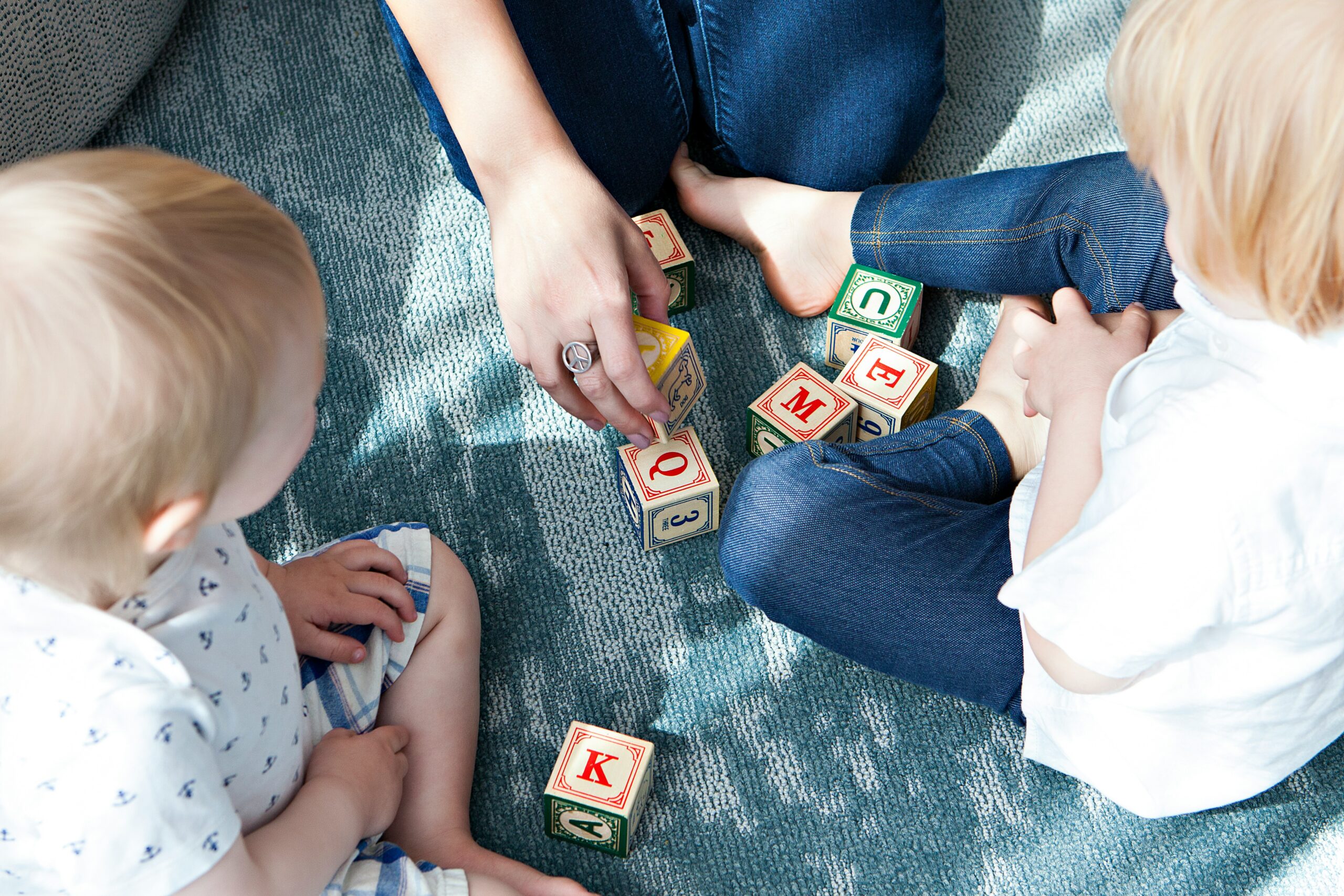
Featured Photo
Image by: Marisa Howenstine
https://unsplash.com/@marisahowenstine
