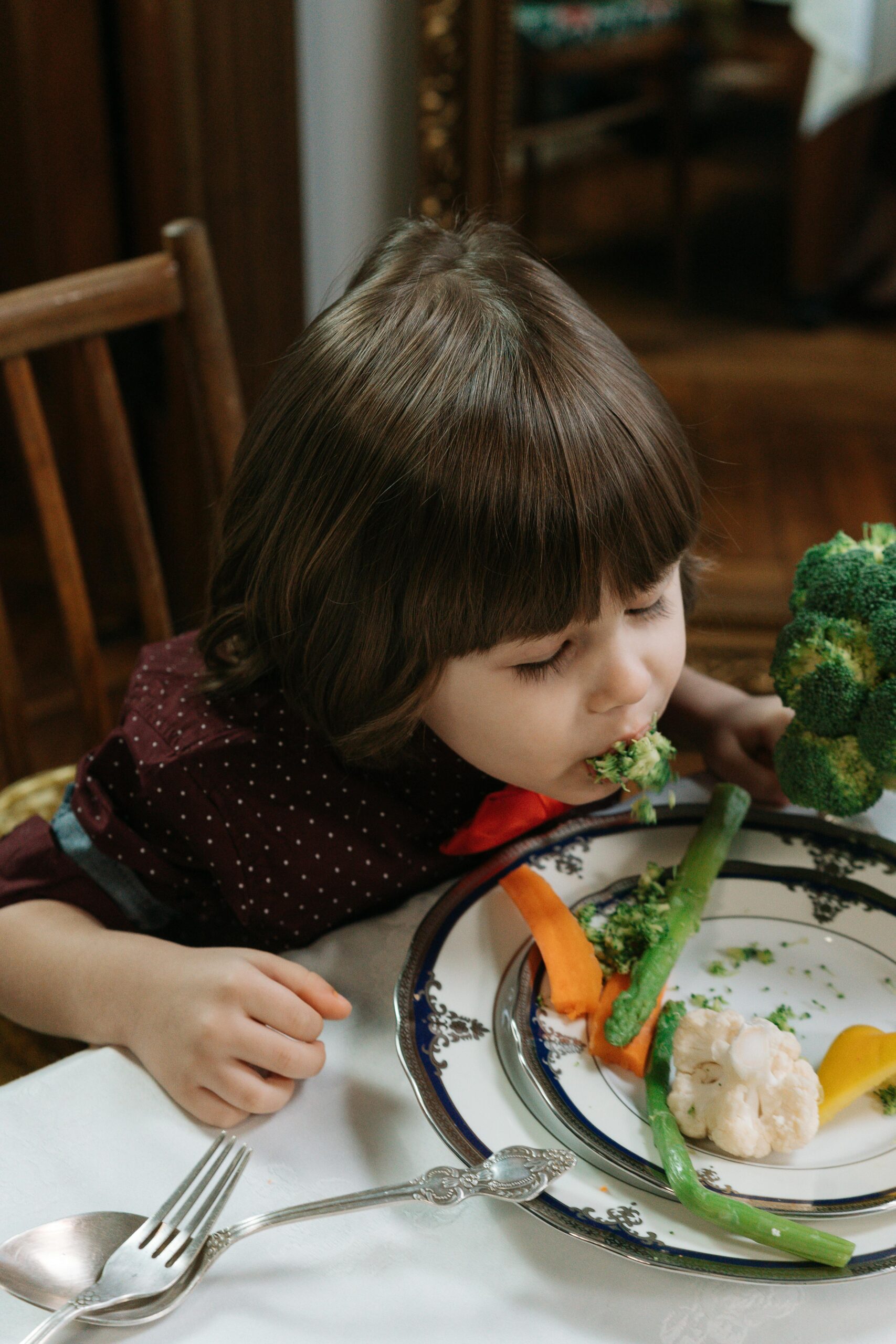
I could write numerous articles on food and early childhood education, because nutrition in the early years is that profound and essential. But if you’re here, chances are you’re thinking:
“Why is my kid such a picky eater?”
Well, I have some news for you:
Children are not naturally picky eaters.
But Rachel—that’s not true, you might say. My kid refuses to eat broccoli, touches nothing but crackers, and acts like I served them poison if there’s something green on the plate.
I hear you. Today, we’re going to unpack why that happens—and what you can do to support your child.
“They Don’t Like It, So I Don’t Offer It”
Let’s start with one of the most common parenting missteps I hear:
“Oh, they don’t like it, so I stopped offering it.”
Please don’t do this.
(And if you already have, don’t worry—it’s not too late to shift!)
There’s a big difference between a child being allergic to a food… and just not liking it yet. So, continue introducing those foods unless there is a serious health risk.
Picky Eating Isn’t Just About Food, It’s About Development
Let’s assume your child is developing typically. You introduced solids at 6 months, transitioned to full table foods by 1 year, and now you’ve got a toddler with opinions.
Here’s the truth:
Toddlers are ego-driven little explorers. They’re claiming independence, testing boundaries, and learning how to make choices—including those related to food.
Refusing green beans today? That’s the same decision-making muscle they used to refuse pink boots this morning. They’re not being “difficult”—they’re learning how to exercise autonomy.
Food Is New All Over Again
Even if your child liked puréed carrots at 8 months, now they’re seeing:
- Carrots in sticks or slices
- Foods in new colors or textures
- The difference between hot and cold
- The feel of a spoon vs. their hands
This stage is filled with sensory learning, which can lead to new hesitations or refusals. It’s not a sign of failure—it’s part of the process.
Messy Mealtimes = Learning Moments
Yes, mealtimes are going to be messy. And yes, it’s frustrating.
(As someone who’s cleaned up after 9… 12… even 20 kids at a time, I get it.)
But all that mess? It’s how children learn:
- Hand-eye coordination
- Fine motor skills
- Self-regulation
- Independence
Let them explore. Let them try. Let them spit things out (yes, really, and don’t reprimand them, but don’t acknowledge that behavior either).
The more experience they have, the less intimidating food becomes.
What You’re Probably Seeing: Food Jags
This is the term for when a child repeatedly wants to eat the same food, only to suddenly refuse it altogether. Or they liked it one day, and the next day they don’t.
It’s normal. And it’s temporary.
Food jags happen when children are:
- Repeating a comfort behavior
- Testing control
- Bored or overstimulated
- Responding to changes in taste buds (yes, they shift!)
It doesn’t mean your child will never eat that food again.
Getting Kids to Try New Foods—Without Pressure
Now that we understand why picky eating happens, the next question is:
How do we encourage our children to try new foods, without turning mealtime into a battle?
First, it’s important to understand that trying new foods is a developmental process. Resistance doesn’t mean your child is doomed to eat only beige snacks for life. In fact, occasional rejection of new foods may be a protective instinct, hardwired to keep newly mobile toddlers from eating unsafe things. So don’t panic—this is normal.
Here’s how to gently guide your child through food exploration:
Set the Foundation with Nutrient-Rich Options
As your toddler’s growth begins to slow (compared to infancy), their nutritional needs remain high, especially for nutrients like:
- Vitamin D (supports bone and immune health)
- Calcium (critical for growing bones and teeth)
- Iron (supports brain development and energy)
- Zinc (helps with immunity and cell growth)
Introduce these nutrients through whole milk (in moderation), iron-rich foods (such as beans and meats), and a variety of colorful fruits and vegetables. Avoid excessive milk and juice, as they can fill them up without providing sufficient variety or iron.
Be sure to check out my article on the foundation of nutrition: Fueling Growth: The 6 Essential Nutrients for Healthy Child Development
Try the “Division of Responsibility” Approach
Feeding expert Ellyn Satter offers a simple and effective framework:
- Adults decide what, when, and where food is served
- Children decide whether and how much they eat
This method reduces pressure while still allowing you to offer balanced, nutritious options. It empowers toddlers with a sense of control—without letting them raid the pantry. Believe it or not, even infants are naturally attuned to their body’s hunger and fullness cues. Trusting children to decide when they’re full helps build a healthy, intuitive relationship with food.
That’s why the old “finish your plate” approach can be harmful. Please don’t insist on it. Ignoring a child’s internal cues can disrupt their ability to self-regulate and may lead to unhealthy eating habits later in life—even contributing to disordered eating patterns. When they say they’re full—believe them. Respecting their signals is a key step toward raising confident, mindful eaters.
Example 1: Instead of “What do you want for lunch?” try:
“Would you like apple slices or carrots with your sandwich?”
This way, your child is choosing, but from within your boundaries.
Example 2: Instead of pressuring your child to finish everything on their plate, try saying:
“I see you didn’t finish all your [food]. That’s okay! Why don’t I save it for a snack later when you get hungry again?”
This response acknowledges their fullness without shame and reinforces trust in their internal hunger cues.
Why These Approaches Work:
It keeps mealtime stress-free, reduces power struggles, and teaches kids that it’s okay to stop eating when they’re full—an important foundation for a healthy relationship with food.
Repetition Builds Familiarity
Don’t give up after one failed attempt. Research shows that it can take 10 or more exposures to a new food before a child accepts it (Groark, C. J., & Song, L. A.,2012).
Tips:
- Always pair a new food with something familiar
- Serve a small portion so it’s not overwhelming
- Offer it in a way that matches a texture or flavor they already enjoy
- Avoid removing the food from their plate—even if they don’t eat it
- Praise their effort: “You were so brave to try that!”
If they spit it out, don’t scold. Keep it low-pressure and try again another day.
Be a Role Model
Kids watch everything we do, including what we eat. If they see you trying a variety of foods (even ones you might not love), they’re more likely to do the same.
Create an environment where tasting something new is just a normal part of everyday life. Share your own thoughts aloud:
“This tomato is so juicy today—want to try a bite with me?”
Even if they say no, they’re learning that food is safe, interesting, and worth exploring.
*Tip: Mirror their plate. Even if you’re not a fan of tomatoes, putting them on your plate shows your child that the food is safe and normal to try.
Keep Meals Simple and Structured
At daycare, meals are served at the table, not while running around. This isn’t just about manners—it reduces choking risk and signals when a child is finished eating. We wash our hands before and after each meal, reinforcing hygiene and routine.
We also practice family-style dining, meaning educators sit and eat with the children, engaging them in conversation about the food they are eating. We describe what they’re eating, model healthy habits, and offer praise when they try something new.
Stick to child-sized portions—about one tablespoon per food group for every year of age—and consider using kid-friendly plates to avoid overwhelming them. MyPlate.com has excellent resources on what your child’s plate should look like.
Big Mistakes Parents Make with Picky Eaters (And What to Do Instead)
When you’re in the thick of picky eating, it’s easy to fall into survival mode. You just want them to eat something. But certain well-meaning habits can actually make things worse long-term.
Let’s go over some of the most common mistakes—and how to shift them into positive strategies that build healthy habits and reduce mealtime stress.
Mistake #1: Only Serving “Safe” Foods
What it looks like:
You offer the same three foods because they’re the only ones your child will eat: maybe chicken nuggets, applesauce, and goldfish crackers.
Why it backfires:
Your child never gets the chance to expand their taste or tolerance. Their limited menu becomes more entrenched over time.
Try this instead:
Always serve one safe food you know they like, but alongside one or two other items. Exposure is key. Even if they don’t eat it today, they’re learning it’s normal to see variety on their plate.
Mistake #2: Pressuring or Bribing Them to Eat
What it looks like:
“Take three more bites and you can have dessert.”
“If you don’t eat this, you can’t play.”
Why it backfires:
This creates a power struggle, and it turns food into a tool for control rather than a means of nourishment. Children may eat to please or rebel, rather than tune into their own hunger and fullness.
Try this instead:
Use neutral language:
“This is what’s for dinner. You don’t have to eat it, but this is what we’re having.”
Allow them to choose if and how much they want to eat. It might take time, but they’ll build internal cues instead of external pressures.
Mistake #3: Removing Food Too Quickly
What it looks like:
Your child says, “Ew!” and you immediately take the food away.
Why it backfires:
This teaches them that making a fuss is an effective way to avoid trying new things.
Try this instead:
Leave the food on their plate. Let them choose not to eat it, but don’t take it away unless it becomes a disruption. That low-pressure exposure is powerful. Even if they don’t taste it, just seeing and smelling the food helps reduce fear and builds familiarity over time.
Daycare teachers—this applies to you, too!
Make sure all food options are served on the child’s plate! They don’t have to eat everything, but having new foods placed alongside familiar ones introduces them gently and repeatedly. This consistent exposure, especially in a group setting, can make a big difference in encouraging children to try new things at their own pace.
Pro Tip: Change It Up!
If your child refuses a food once, don’t give up—but don’t serve it the exact same way every time either. Children are sensitive to texture, temperature, and presentation. Try serving that same food differently next time:
- Raw vs. cooked (e.g., raw carrot sticks vs. steamed carrots)
- Warm vs. cold (e.g., roasted tomatoes vs. cherry tomatoes from the fridge)
- Whole vs. cut-up (e.g., a whole apple vs. apple slices)
Small changes can make a big difference. The key is to stay patient, offer without pressure, and keep experimenting.
Mistake #4: Catering to Their Demands Like a Short-Order Cook
What it looks like:
You cook a separate meal just for them every night. It’s one thing to cut up a fruit differently, but to serve a whole separate meal is preposterous.
Why it backfires:
It teaches them they don’t need to try anything new because someone will always accommodate their preferences.
Try this instead:
Prepare one family meal with a couple of components they can handle (e.g., plain rice alongside a stir-fry). Let them choose what to eat from what’s offered—no substitutes.
Mistake #5: Labeling Them as “Picky”
What it looks like:
“She’s just picky” or “He’ll never eat vegetables.”
Why it backfires:
Children internalize labels. If they believe they’re “picky,” they may stop trying altogether.
Try this instead:
Use growth mindset language:
“You’re still learning to like that.”
“I’m proud of you for trying a bite!”
It sets the tone that taste preferences evolve, and that’s okay.
Mistake #6: Using Screens During Meals
When meals become passive or mindless, children miss out on learning about the different tastes, textures, and appearances of various foods. It also takes away from the social experience of eating together, which helps build language, emotional connection, and food curiosity.
Try this instead:
Make mealtimes a screen-free zone. Sit together at the table, even if it’s just for 10–15 minutes. Talk about your day or describe the food—its color, texture, or where it comes from. This builds mealtime engagement and helps kids connect food with family and routine.
Picky Eaters
This behavior typically begins in the toddler years and can last through early grade school. It’s essential to stay patient and consistent—don’t get discouraged or give up! For older children, try getting them involved in the cooking and preparation process. Kids are often more open to trying new foods when they’ve had a hand in making them. In fact, I used to start this as early as the pre-toddler stage. Even simple tasks—like dumping fruit into a bowl or helping me mash it by hand-over-hand—made a difference. It’s not just about food prep; it’s about ownership, engagement, and building positive food experiences from the start.
Final Reminder: Progress Over Perfection
It’s not about winning every mealtime. It’s about creating a lifelong relationship with food that’s rooted in curiosity, confidence, and joy. Just remember, picky eating doesn’t start as a habit—it forms over time when food refusals are consistently accepted without challenge.
References:
Academy of Nutrition and Dietetics. (n.d.). Eat right: Academy of Nutrition and Dietetics. https://www.eatright.org
Groark, C. J., & Song, L. A. (2012). Health and nutrition of children.
U.S. Department of Agriculture. (n.d.). MyPlate. MyPlate.gov. https://www.myplate.gov
Featured Image By
Photo by cottonbro studio: https://www.pexels.com/photo/kid-eating-broccoli-6970095/
