Introduction
When most people think about reading, they picture a child in grade school sounding out words or curling up with a bedtime story. But the truth is, reading readiness starts long before your child ever opens a book. From the moment they are born, children are building the foundation for one of the most essential skills they will ever learn — the ability to read and comprehend.
Reading is not just about decoding letters; it is the bridge between spoken language and written language. When children hear words, they store the sounds in their brains. Over time, they learn to match those sounds to printed symbols — letters and letter combinations. This link, known as phoneme–grapheme correspondence, is the heart of reading. Without it, words on a page remain just shapes and squiggles.
- Phoneme: the smallest unit of sound in spoken language (e.g., /m/, /a/, /t/).
- Grapheme: the written symbol or letter(s) that represent that sound (e.g., m, a, t).
Research from the National Reading Panel (NICHD, 2000) shows that proficient reading requires mastery of five essential components (the “Big Five”):
- Phonemic awareness – hearing and manipulating sounds in spoken words.
- Phonics – connecting letters with sounds.
- Fluency – reading with speed, accuracy, and expression.
- Vocabulary – knowing the meaning of words.
- Comprehension – understanding and interpreting text.
(See Blog 1: The Science of Reading for a deeper dive into how these five components fit together and shape reading instruction.)
Reading Shapes the Brain
Decades of neuroscience research show that reading rewires the brain, strengthening connections between the visual, auditory, and language-processing regions (American Psychological Association, 2014).
- Strong readers primarily activate the left hemisphere of the brain, which handles language processing.
- Effective reading instruction can literally change the structure of a child’s brain, improving connectivity and even increasing gray matter volume (Shaywitz & Shaywitz, 2004; Eden et al., 2004).
This means the act of reading — and the way it’s taught — can have lasting effects on how a child learns, thinks, and processes information for the rest of their life.
Reading is not just about school readiness. It influences:
- Academic success – Children who read well early on are more likely to succeed across all subjects.
- Social-emotional growth – Stories build empathy and help children understand perspectives different from their own.
- Cognitive development – Reading strengthens attention span, memory, and problem-solving skills.
- Communication skills – Exposure to a rich vocabulary improves both spoken and written expression.
Studies show that children who are read to at home before school entry have larger vocabularies and stronger language skills than their peers (Snow et al., 1998).
Decoding and the Alphabetic Principle
The alphabetic principle is the understanding that letters and letter combinations represent specific sounds. Grapheme–phoneme correspondences form the basis of decoding, where a child blends letter sounds into spoken words. For example, the printed word cat is decoded by saying /k/ /a/ /t/ and blending them into “cat.”
Explicit Instruction: Why It Matters
To teach these skills effectively, research supports the use of explicit instruction — a clear, direct, and structured approach — rather than expecting children to figure it out on their own (see Blog 1 for the full definition of explicit instruction).
Explicit instruction in reading often follows this sequence:
- State the goal (“Today we’re going to learn the sound the letter m makes.”)
- Model the skill (“Watch how I put my lips together and say /m/.”)
- Guided practice with feedback (“Now you try—remember to press your lips together.”)
- Independent practice to reinforce learning.
Unlike incidental learning, where skills are acquired through exposure, explicit instruction ensures that every child has multiple, intentional opportunities to master each part of reading, from letter–sound knowledge to blending and comprehension strategies.
Example at Home:
- Show your child a letter card and say, “This is s. It makes the /s/ sound, like in sun.”
- Model the sound, then guide your child to imitate it.
- Reinforce with pictures or objects (sock, sand, seal).
- Practice with short decodable texts featuring s.
The Power of Systematic Phonics Instruction
Systematic phonics instruction, which teaches letter–sound relationships in a planned sequence, is proven more effective than incidental teaching for building decoding skills (Langenberg, 2000). Orthographic depth also plays a role: languages with consistent letter–sound mapping (like Italian) are learned more quickly than English, which has many irregularities (Coch, n.d.).
Example of Systematic Phonics in Action
Imagine two different approaches to teaching the same skill:
- Incidental approach: A teacher reads a story aloud, and when the word ship appears, she pauses and explains, “This word starts with sh. That’s the sound /sh/.” While useful, children may or may not remember the sound or see it again soon.
- Systematic approach: A teacher introduces the /sh/ sound as part of a planned sequence. First, she shows the letters sh and explains the sound. Then, children practice reading a list of words with sh (ship, shop, fish, brush). Next, they read a short decodable text containing many sh words (“The ship is in the shop”). Over the week, students practice writing sh, playing games where they identify the sound, and reviewing it with flashcards.
By the end, the /sh/ sound is reinforced through multiple exposures, structured practice, and intentional review, ensuring the child stores it in long-term memory.
The Role of Visual Processing
Another key part of learning to read involves visual processing.
- Visual Word Form Area (VWFA): A specialized brain region that recognizes written words automatically. This region doesn’t exist in non-readers; it develops through repeated exposure to print and strong letter–sound knowledge.
- Eye movement development: Beginning readers often have longer fixations (eyes pause longer on each word), shorter saccades (smaller jumps between words), and more regressions (going back to re-read). With practice, eye movements become more efficient, which supports faster reading and improved comprehension.
Example at Home:
- Letter Hunt: Ask your child to point out every time they see a specific letter while reading together.
- Tracking Practice: Use your finger to follow under the words as you read aloud, then encourage your child to do the same.
- “I Spy” in Print: Play a game by saying, “I spy a word that starts with th,” and let your child scan the page.
It’s Never Too Early — or Too Late — to Start
Parents sometimes worry that if their child is not reading early, they will “miss the window.” But here’s the good news: with explicit, systematic instruction, even struggling readers can catch up. Brain imaging has shown that targeted interventions can normalize brain activity in children with reading difficulties in as little as eight months (Shaywitz & Shaywitz, 2004).
For infants and toddlers, reading looks different — it’s about exposure, interaction, and connection. The simple act of talking, singing, and reading aloud every day builds the neural groundwork for literacy.
It’s also important to remember that “reading” doesn’t look the same at every age. What’s developmentally appropriate for a baby will differ from a preschooler, and what works for a kindergartner will not be the same as for a third grader. We’ll take a closer look at developmentally appropriate reading practices for each stage of growth in Blog 3, so you can feel confident about what to expect and how to support your child along the way.
References
- American Psychological Association. (2014). How the brain learns to read.
- Coch, D. (n.d.). The science of reading and orthographic depth.
- Eden, G. F., Jones, K. M., Cappell, K., Gareau, L., Wood, F. B., Zeffiro, T. A., … Flowers, D. L. (2004). Neural changes following remediation in adult developmental dyslexia. Neuron, 44(3), 411–422.
- Hougen, M. C., & Smartt, S. M. (2020). The science of reading: A handbook for teachers.
- Langenberg, D. (2000). Report of the National Reading Panel: Teaching children to read. NICHD.
- NICHD. (2000). Report of the National Reading Panel: Teaching children to read.
- Shaywitz, S. E., & Shaywitz, B. A. (2004). Reading disability and the brain. Educational Leadership, 61(6), 6–11.
- Snow, C. E., Burns, M. S., & Griffin, P. (1998). Preventing reading difficulties in young children. National Academy Press.
- [See The Science of Reading for additional definitions and explanations ]
Featured Image:
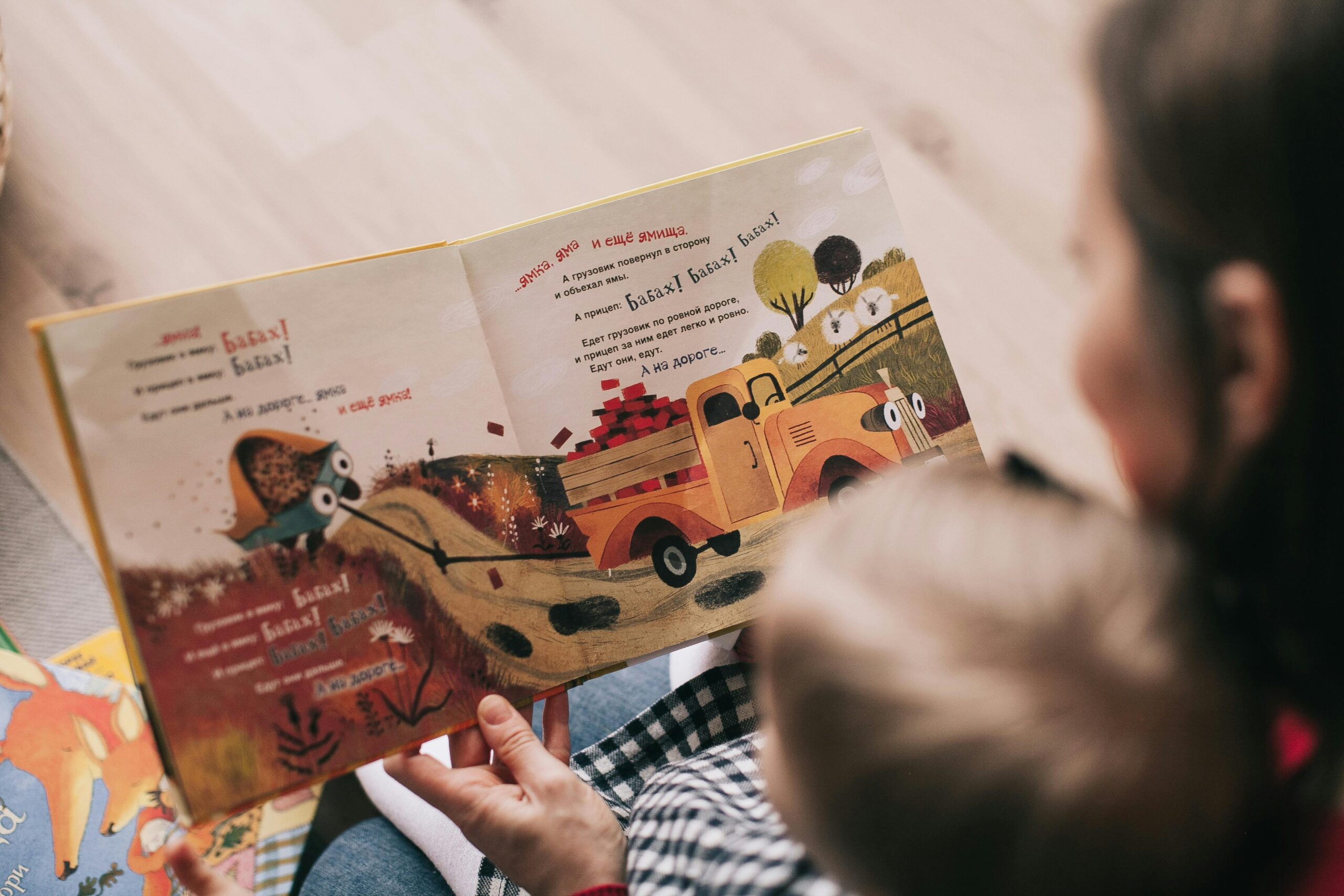
Photo by Lina Kivaka: https://www.pexels.com/photo/woman-reading-book-to-toddler-1741231/
